Evaluating the Practical Appeal of Antique for Craft and Brand Projects
In the vast landscape of typography, finding a display font that balances distinct character with genuine readability is often a challenge for designers and content creators. Antique emerges as a compelling option in this space, offering a neat brushed aesthetic that feels both handcrafted and professional. Unlike many distressed or overly ornate brush scripts that sacrifice legibility for style, this typeface maintains a clean structure while delivering the organic texture associated with traditional lettering. For professionals ranging from small business owners to freelance graphic designers, understanding the specific utility of Antique is essential before integrating it into a branding package or creative project.
The primary appeal of Antique lies in its ability to evoke a sense of heritage without appearing dated or difficult to read. The "brushed" quality suggests human touch and artisanal care, which can be particularly effective for brands looking to communicate authenticity. However, the "neat" descriptor is equally important; it indicates that the strokes are controlled and consistent, avoiding the chaotic variability found in some casual script fonts. This balance makes the font versatile enough for formal applications like letterheads while remaining approachable for craft-oriented stationery.
Key Characteristics and Visual Identity
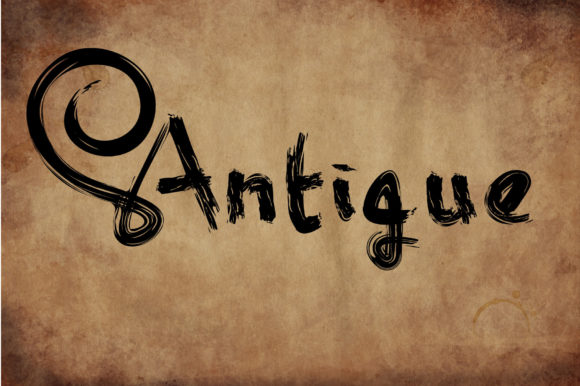
When analyzing the visual DNA of Antique, several defining features stand out. The stroke modulation mimics the pressure changes of a flat brush, creating thick downstrokes and thinner horizontal connections. Yet, unlike a true calligraphic script, the terminals are often squared off or slightly tapered in a way that suggests a stamp or a printed block rather than wet ink. This hybrid nature gives the font a unique texture—it feels handmade but possesses the reliability of a digital asset.
- Texture: The subtle grain or brush effect adds depth without overwhelming the eye, making it suitable for both light and dark backgrounds.
- Structure: The uppercase letters are robust and commanding, ideal for headlines where immediate impact is required.
- Spacing: Generally generous kerning allows the characters to breathe, preventing the "clumping" effect common in tighter display faces.
- Versatility: While primarily a display font, its clarity allows for use in short body text elements, such as pull quotes or captions.
For marketers and publishers, these characteristics translate into a tool that can elevate simple text into a design element. The font does not require extensive embellishment to look finished; its inherent style carries the visual weight. This efficiency is valuable in fast-paced workflows where time spent on vectorizing hand-lettering is not feasible.
Practical Applications in Professional Workflows
The real test of any typeface is its performance in actual projects. Antique shines in contexts where a brand needs to establish a personality that is both established and creative. For instance, in the realm of stationery design, this font excels. A wedding invitation suite or a boutique hotel's letterhead benefits immensely from the refined yet rustic look. It signals attention to detail and a departure from sterile corporate standards.
Consider the needs of a small business owner launching an artisanal product line, such as handmade soaps, craft beers, or specialty coffee. Using Antique for logo lockups or packaging labels can instantly communicate the "craft" aspect of the business. It bridges the gap between modern minimalism and vintage charm. Similarly, educators and bloggers who produce printable resources or e-books can utilize this font for chapter titles and section headers to break up monotony and add visual interest.
However, practical usage also requires an understanding of limitations. As a display font, Antique is not intended for long-form body copy. While the "neat" construction aids readability, the stylistic flourishes can cause eye fatigue if used in paragraphs exceeding three or four lines. Professionals should reserve it for headlines, subheads, logos, and short calls to action. In digital environments, it performs well at larger sizes, but care must be taken when scaling down for mobile interfaces to ensure the brush details do not blur or disappear.
Assessing Quality and Long-Term Value
From a production standpoint, the consistency of Antique is a significant asset. Many brush fonts suffer from irregular baseline shifts or inconsistent x-heights that make alignment a nightmare during the layout process. This typeface, by contrast, offers a reliable grid structure. Designers can pair it with clean sans-serif or serif bodies without struggling to make the elements coexist harmoniously. This flexibility reduces revision time and ensures a polished final output.
The long-term value of incorporating Antique into a design library stems from its timeless aesthetic. Trends in typography cycle rapidly, moving from ultra-thin geometrics to heavy slabs and back again. However, the "antique" or vintage-inspired look has remained a staple in advertising and branding for decades because it taps into a psychological association with quality and tradition. By choosing a font that leans into this classic vibe without being a direct copy of a specific historical era, creators future-proof their designs against looking obsolete within a year.
Furthermore, the file quality and format availability typically associated with professional fonts of this caliber ensure compatibility across various software ecosystems. Whether working in Adobe Illustrator for print vectors or CSS for web implementation, the font renders cleanly. This reliability is crucial for freelancers who need to deliver assets that clients can easily use across different media channels.
Who Benefits Most from This Typeface?
While Antique has broad appeal, specific groups will find it more immediately useful than others. Creative entrepreneurs building a personal brand will appreciate how the font adds a signature feel to their communications. Event planners and wedding coordinators can leverage its elegance for invitations and signage. Additionally, publishers of lifestyle magazines or cookbooks will find it effective for titling recipes or feature articles where a warm, inviting tone is necessary.
Conversely, industries requiring a hyper-modern, tech-forward, or strictly corporate image might find the brushed texture too informal. A fintech startup or a medical device manufacturer would likely prefer a neutral geometric sans-serif. Recognizing this boundary is part of making an informed design decision. The goal is not to force a font into a project where it doesn't belong, but to identify where its specific strengths solve a communication problem.
Final Recommendations for Implementation
To get the most out of Antique, consider pairing it with a highly legible, neutral companion font. A simple grotesque sans-serif works well to ground the expressive nature of the brush strokes, creating a balanced hierarchy. When using it for print, ensure high-resolution outputs to capture the nuance of the brush edges. For web use, implement variable font technologies if available, or carefully selected weights to maintain clarity across different screen densities.
Ultimately, Antique represents a thoughtful intersection of style and function. It offers the warmth of hand-lettering with the precision of digital typesetting. For professionals seeking to infuse their projects with a sense of craft and history without sacrificing professionalism, this font provides a reliable and aesthetically pleasing solution. Its value lies not just in how it looks in isolation, but in how effectively it helps tell a story that resonates with audiences looking for authenticity in a crowded marketplace.